
You are currently browsing the category archive for the ‘Uncategorized’ category.
I’m glad you’re here. Please take a look around.
Also, I’d love it if you’d take a look at the information about the Bible Memorization Song CD that our family has been a part of.
Here’s a sample video. It’s bluegrass!
To the family to whom we are giving a meal because they are going through a challenging time:
When we hand you a dish with homemade lasagna and a salad kit, or spaghetti casserole, or a turkey hot dish, we’re not merely saying “be warm and well fed”. Here are a few ideas we want you to understand and consider while you’re sitting down to eat it.
1. Please enjoy this meal.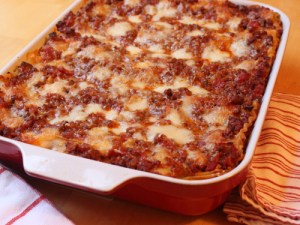
“Be warm and well fed” isn’t the only thing we are saying, but we are saying it. We want your family to have this meal to eat today and we hope your stomachs are filled and you find it delicious and satisfying.
2. We stand with your family.
As you walk through this crisis, please know that you are not alone. If you’ve just had a baby, we are joyful with you. If you’ve just lost a baby, we are grieving with you. We aren’t experiencing what you are, but we are on your team.
3. It’s understandable if you don’t feel like making a meal.
Here’s a thought that I hope no one in a church ever thinks: “My kids have just lost a grandparent, and now they have a mom who can’t even put together a supper.” You’re in crisis mode. It’s reasonable that you have your mind on other things. It’s reasonable if building up the inertia to cook dinner is difficult right now.
4. We want your family to have times of rest.
Long hospital visits have a cost. A new baby is hard work. Preparing for a funeral is a complex challenge. Please give yourself a break as you sit down to eat this.
5. Your God wants you to feel loved by the church.
So then, as we have opportunity, let us do good to everyone, and especially to those who are of the household of faith. (Galatians 6:10 ESV)
Contribute to the needs of the saints and seek to show hospitality. (Romans 12:13)
Above all, keep loving one another earnestly, since love covers a multitude of sins. Show hospitality to one another without grumbling. As each has received a gift, use it to serve one another, as good stewards of God’s varied grace: (1 Peter 4:8-10)
As we’re giving you a meal, we’re doing what God is telling us to do. He wants this for you.
6. We hope you are experiencing moments of joy.
Another thought I don’t want anyone in church to think: “My spouse is in extreme discomfort because of the radiation therapy. It’s not right if I feel any bits of momentary happiness” Yes, it is. It’s okay. It’s right there in the Second Corinthians: “Sorrowful yet always rejoicing”. As we hand the meal to you, we’re praying that you’ll be surprised by joy (not to mention peace) that passes all understanding but is nevertheless real and God given. And maybe this meal can be a part of it.
7. Please know Grace exists.
When a gift is given, it’s not uncommon for the receiver to say, “Oh, you didn’t have to do that.” This is true. There is no law or moral code that says we must give meals. Just like there was no law or moral code that says that God had to provide a way of salvation for us. But He did, at great cost for His Son. A much greater cost than that of this meal. If you are feeling like you don’t deserve to receive it, remember: It doesn’t matter.
Our family has experienced the death of family members, hospital stays, two broken arms and the arrival of eight children. As such, we’ve been given many more meals than we have given to others. These seven messages are what I’ve heard when we’ve eaten the delicious and satisfying food provided by others. A meal given in difficult times is God speaking through his servants. To you.
Is this what you’re saying when you give a meal to someone?
If you’d like to print this out and put it in the grocery bag that you hand to the next family you give a meal to, be my guest.
Oh, and by the way, it turns that last Snake Book Post was my 300th post on this blog.
And this is my 301st.
As a dad blogger, I feel like something really should be said about this book:

We picked it up at Barnes & Noble – my son wanted a snake book – Bargain priced at $9.98. It’s a 180 pages, so it’s fairly thick book. Obviously it was a great deal.
But more recently I’ve had a chance to take a look and it’s different from what one might expect. Very different.
At the turn of almost every page there is a new snake or reptile species to learn about. It includes a “Did you know” set of interesting trivia about the species, a map of where in the world and a nice big picture of the creature. So far so good. And so far just like so many other kinds of helpful animal books.
But, dear parent, try reading one of these pages. Oh, wow, you might think, turning to a page at random, this particular snake is quite dangerous – look at that screaming young man, who is being bitten by it. This image is a little troubling, so you turn the page and – Oh, my, here’s another one, who can jump out of his cage and attempt to swallow the face of the unsuspecting snake wrangler who unwarily opened the lid. Okay, I’ll try to keep my eight year old from reading those two pages.
Now here’s another and, Dang, I’m really getting bad luck. Here’s a young lady who innocently tried to pick up some fire wood from a pile and now she’s screaming in agony with a Coral snake latched onto her ring finger.
I can honestly say that after looking at this book several times, I have not found a single non-disturbing page. Every snake has a story about how it caught someone unawares.
I was intrigued by this and wondered if this book was on Amazon and what the reviews were like. I was not disappointed. But apparently many reviewers were after getting this book. Nearly half of the reviews are one star.
One reviewer calls the authors, “ghouls”. The reviews have titles like, “Please don’t buy this” and “Terrible book for children”.
I quote from one review:
“DO NOT BUY THIS BOOK. Here is an example of the nauseating story-telling: “Racked with pain as the terrible venom eats away at his flesh, the fisherman casts off. As he drifts out to sea he cuts the bite wounds and tries to suck out the venom, but soon collapses into unconsciousness. He bleeds to death long before anyone spots his boat, and is found sprawled in a pool of his own blood.” This fictitious incident involving a Fer-de-lance snake is the stuff of children’s nightmares. In reality, the Fer-de-lance is a reclusive creature that plays an important role in its natural environment …”
I can only imagine that there is some dad who has a child who’s irrationally afraid of snakes and thinks, “I could buy him/her a book about snakes. Maybe that would demystify them and show them how helpful and non-dangerous they are.” Heaven help the parent who buys this book with that purpose in mind.
Seriously, you should have a healthy fear of snakes and you should have a healthier fear of this book.
By the way, I checked and as far as I can see, the Garter Snake, which Wikipedia describes as “single most widely distributed genus of reptiles in North America” and is mostly harmless, is not in this book. Hmmm.
Update: Bethyada mentioned in a comment that his son would love this book. Yes, I had been thinking that. There are some boys who are: This book has scary in it? I love scary! Bring me the scary! This book would be great for them. But perhaps not for their sister.
Dads, except for happy surprises like Christmas and Birthdays, you should never ask your child to keep anything a secret from your wife.
As always, please let me know if you think I’m off base or if you can think of other exceptions.
Like maybe this?

Dads, if you find yourself thinking, “Oh, yeah, I was going to tell her about that”, it might be time to schedule in more one on one conversations with your wife.
Dads, if you ever find yourself alone with your wife in an elevator, kiss her. Dramatically.

Dads, be advised that many forms of legitimate creativity that your kids may engage in will, realistically speaking, cause messes.
Don’t force them to stop because of it.
You know what kind of parenting book I’d really like to read? I’d love to see a book of interviews with parents who’ve had kids who have really failed, or fallen away from God, or rejected the family, or in some way broke the parent’s heart.
I would like questions like these answered –
– To what degree (if any) do you think it was your fault that things when wrong?
– What would you have done differently?
– How are you currently handling this situation?
– Why do you think this happened to one child but not the other?
– What advice would you give parents?
– Where do you see God’s grace in this?
I think this would be extremely interesting and helpful to parents whose kids aren’t yet . I also think that a book like this will never be written because the interviews would be so hard.
Have you noticed the disparity in how churches handle Mother’s Day and Father’s Day? Perhaps you hadn’t until someone pointed it out:
“On Mother’s Day, every pastor in every church encourages everyone to honor every mother, and give them gifts and praise them and tell them how valuable they are. But on Father’s Day, every pastor in every church lectures every dad in how he can be better, pointing out potential ways that he is failing and encourages each dad to take a good hard look at ways that there is room for improvement in their fathering and husbanding. It’s so unfair!”
Now, obviously, this is an overstatement. Not every pastor preaches this way. But make no mistake, to the degree that this is true, this difference of approach to these two parental days is unfair. But is it unwise? Is it wrong? Is it harmful?
First things first. It would be good to consider the probable causes behind this phenomenon. I think there is a clear primary reason. Walk with me through a series of connected thoughts –
1. In present day America, most pastors and church leaders are men. Someday that might not be true, but that’s how it is now.
2. To suggest a list of ways that mothers might be failing their children and husbands is (for right or for wrong) negative towards women.
3. Pastors are generally decent people. And those who aren’t want to appear to be decent.
4. Decent men, speaking in public, are hesitant to say negative things about women.
4b. Decent men, speaking in public, are also hesitant to say overly positive things about men in general, for fear of sounding (or actually being) self-serving.
5. Therefore, pastors (and church leaders) encourage and honor women and they challenge and point out the flaws of men.
Now I think you’ll agree that a pastoral hesitancy to be negative about women is a good thing. A man who enjoys saying negative things about women probably shouldn’t be a pastor.
But I’m aware that there are many who feel that the end result of this hesitancy is bad. They might say that it’s not good for pastoral words about men to be more challenging than honoring.
So let’s look to the Bible. Now obviously the biblical authors (most notably Paul and the prophets) have things to say about the roles of husbands and wives and men and women. But what does it have to say to and about mothers and fathers, specifically?
What the Bibles says about Fathers
There are quite a few statements about Dads in the Bible. Here are the passages I found:
And he said to the people of Israel, “When your children ask their fathers in times to come, ‘What do these stones mean?’ then you shall let your children know, ‘Israel passed over this Jordan on dry ground. (Joshua 4:21-22 ESV)
He established a testimony in Jacob and appointed a law in Israel, which he commanded our fathers to teach to their children. (Psalm 78:5)
“Behold, I will send you Elijah the prophet before the great and awesome day of the LORD comes. And he will turn the hearts of fathers to their children and the hearts of children to their fathers, lest I come and strike the land with a decree of utter destruction.”
(Malachi 4:5-6 ESV)
Fathers, do not provoke your children to anger, but bring them up in the discipline and instruction of the Lord.
(Ephesians 6:4 ESV)
Fathers, do not provoke your children, lest they become discouraged.
(Colossians 3:21 ESV)
This is a fairly complete sampling of verses that talk about fathers in general. I hope you’ve noted that they are all (directly or indirectly) imperatives – they are telling fathers what they should do.
What the Bibles says about Mothers
I actually had more trouble finding verses about Moms in general, but here are three:
But we were gentle among you, like a nursing mother taking care of her own children. (1 Thessalonians 2:7 ESV)
As one whom his mother comforts, so I will comfort you; you shall be comforted in Jerusalem.
(Isaiah 66:13 ESV)
But I have calmed and quieted my soul, like a weaned child with its mother; like a weaned child is my soul within me.
(Psalm 131:2 ESV)
Notice these aren’t imperative, but declarative statements – A mother is gentle. A mother comforts, calms and quiets a child. These are positive, encouraging words
There is one other passage I’d like to point out – the end of Proverbs 31. It’s clear this text is referring to a mother. Her children rise up and call her blessed.
… her husband also, and he praises her:
“Many women have done excellently,
but you surpass them all.”
Charm is deceitful, and beauty is vain,
but a woman who fears the LORD is to be praised.
Give her of the fruit of her hands,
and let her works praise her in the gates.
(Proverbs 31:28-31 ESV)
Again, these are encouraging words. Very, very, encouraging words. So throughout the Bible, fathers are given guiding imperatives and mothers are given encouraging declaratives. Doesn’t that sound familiar?
Yes … maybe modern day churches are doing it right.
I will end with one final passage – Paul’s guidance to Timothy, the young church leader he’s mentoring.
Do not rebuke an older man but encourage him as you would a father, younger men as brothers, older women as mothers, younger women as sisters, in all purity.
(1 Timothy 5:1-2 ESV)
Everyone should get some encouragement.
In any case – I hope all of you dads have a happy Father’s Day!
In case you’re curious, here is a list of other posts on my blogs which show a whole category of items from the Bible.


 Responsible Father